
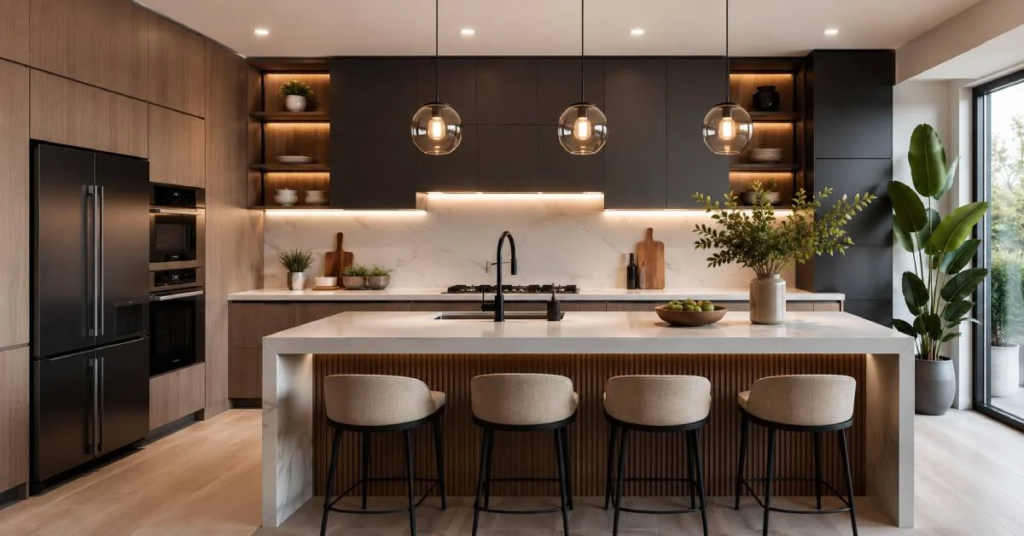
The Kitchen & Dining area are two of the most frequently used spaces in a home. They are where meals are prepared, conversations happen, guests gather, and everyday routines take place. Because of that, these spaces need to feel comfortable and practical, but that does not mean they have to look plain.
Creating a stylish Kitchen & Dining area does not always require expensive furniture, a complete renovation, or a professional interior designer. Sometimes, a few thoughtful changes can make a noticeable difference. A better arrangement, warmer lighting, useful storage, or a simple table centerpiece can completely change the atmosphere.
Whether you live in a small apartment, a family house, or a rented space, there are plenty of easy ways to make your kitchen and dining area feel more organized and inviting. The key is to choose ideas that suit the way you actually use the space.
Start With a Simple Kitchen & Dining Layout
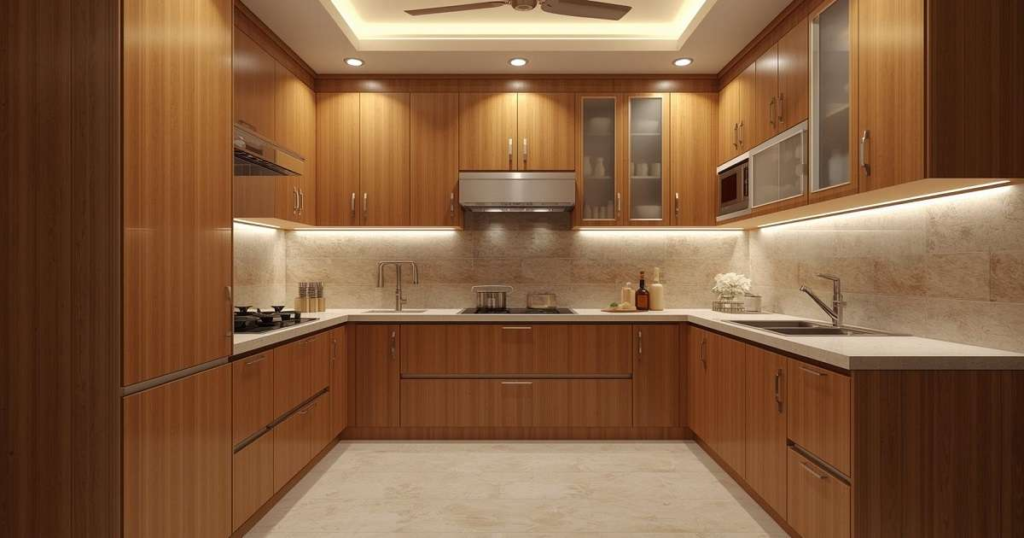
Before buying decorations or changing colors, take a look at the way your kitchen is arranged. A beautiful kitchen can quickly become frustrating if frequently used items are difficult to reach or there is not enough space to move around.
Keep everyday cooking essentials close to the areas where you use them. For example, knives, chopping boards, and basic utensils can stay near the preparation area. Pots and pans can be placed where they are easy to access while cooking.
Try not to fill every available surface with appliances and containers. Leaving some open counter space can make the kitchen look cleaner and also gives you room to prepare food comfortably.
Even small changes in placement can make the room feel more spacious.
Keep the Kitchen Counter Clutter-Free
Kitchen counters often become a temporary home for everything from spice jars to mail and small appliances. While some items need to stay out, too much on the counter can make the whole kitchen appear messy.
Start by deciding which items you use every day. Keep those within easy reach and move occasional-use appliances into cabinets or storage areas.
A simple tray can also help group frequently used items together. Instead of having oil bottles, salt, pepper, and other seasonings spread across the counter, place them on one tray.
This makes cleaning easier and gives the kitchen a more organized appearance without requiring additional furniture.
Use Open Shelves for Both Style and Storage
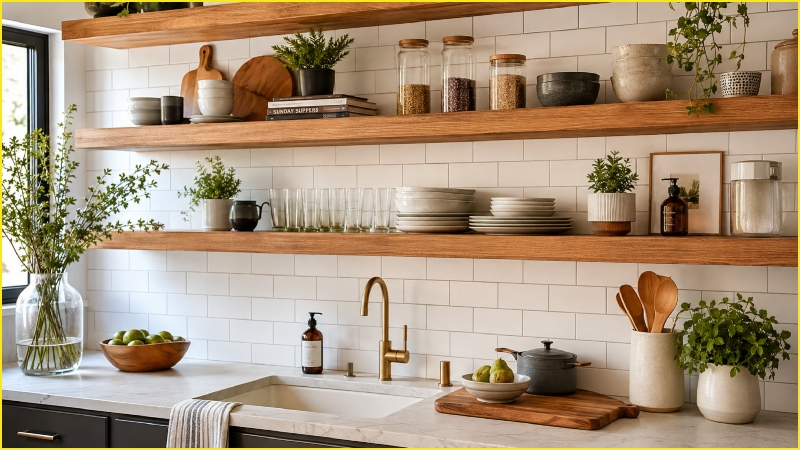
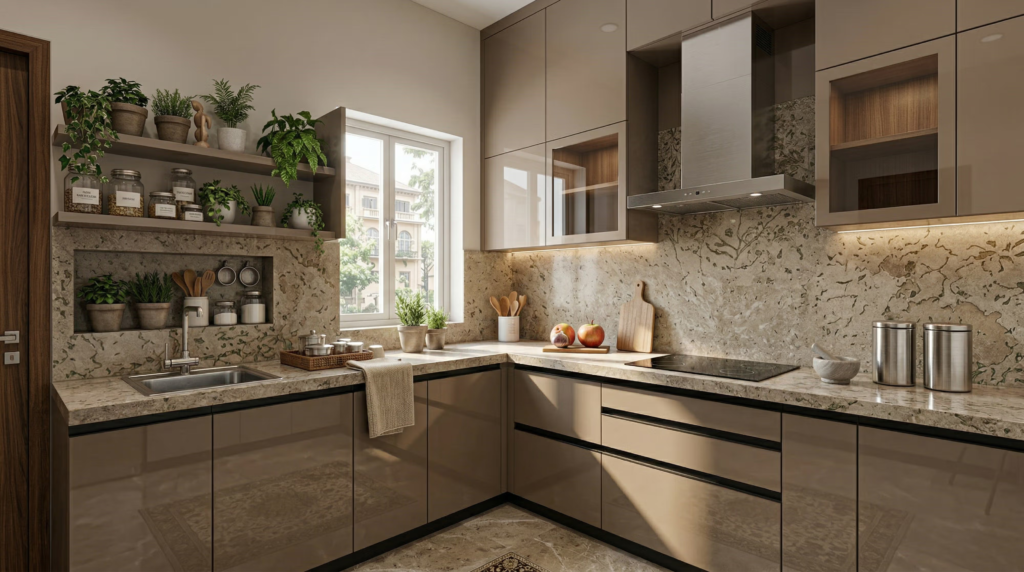
Open shelves can add character to a kitchen while providing useful storage. They are especially helpful when you want to display attractive plates, cups, jars, or small plants.
The important thing is not to overcrowd them. A shelf filled from end to end can look untidy rather than stylish.
Mix practical items with a few decorative pieces. For example, a row of everyday mugs can sit beside a small plant or a decorative bowl.
If you have limited wall space, even one or two shelves can be enough to add visual interest.
Choose Kitchen & Dining Colors Carefully
Color has a major effect on how a kitchen feels. You do not necessarily need bold colors everywhere. Neutral shades such as white, cream, beige, soft grey, or light wood tones can create a calm and timeless look.
If you prefer more color, introduce it through smaller details. Colorful kitchen towels, storage containers, artwork, curtains, or table accessories can bring personality into the room without making the space feel overwhelming.
Another simple approach is to choose one main color and repeat it in different areas. For example, if you select green as an accent, you might use it in a small plant pot, kitchen towel, and dining table decoration.
This creates a sense of connection between different parts of the room.
Add Warm Lighting in Kitchen & Dining
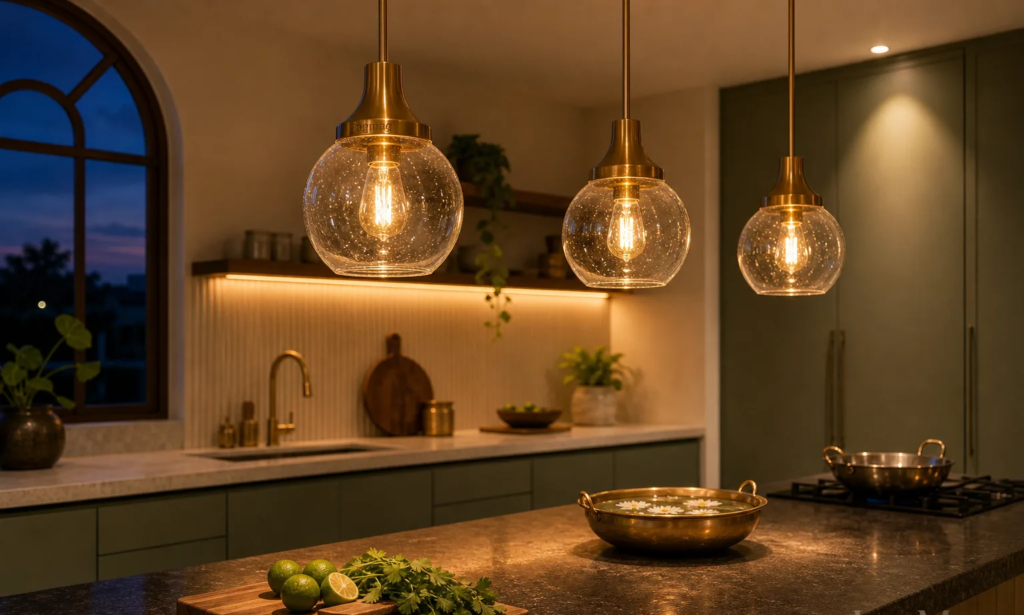
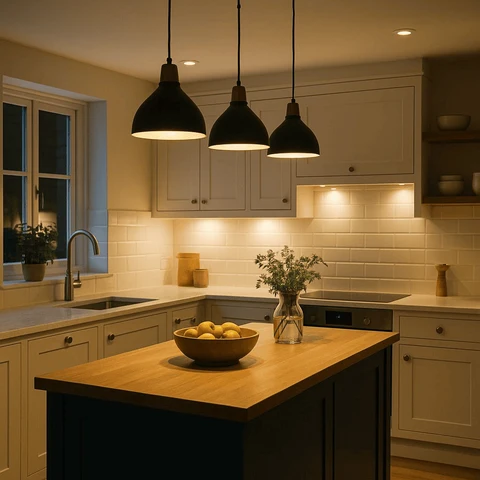
Lighting can change the mood of a kitchen and dining area more than many people expect.
Bright lighting is useful when preparing food or cleaning, but softer lighting can make the dining area feel more comfortable during meals.
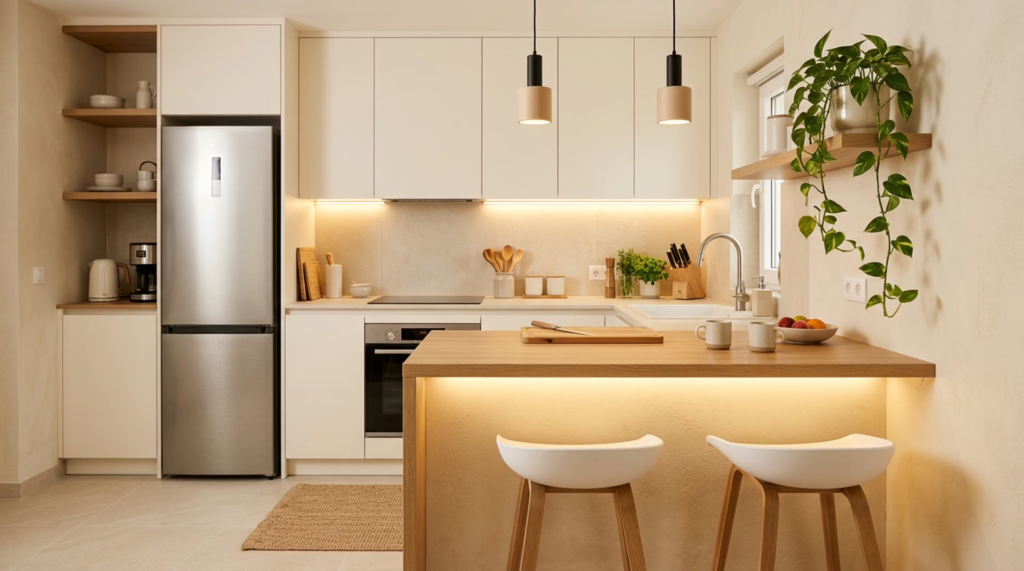
If possible, use different types of lighting for different purposes. Ceiling lights can provide general illumination, while under-cabinet lights can make kitchen work easier. A pendant light above the dining table can also become a decorative feature.
Warm-toned lighting often creates a cozy atmosphere, especially in the evening.
You do not need complicated lighting systems. Even replacing an old fixture or adding a small lamp in the right place can make the space feel different.
Make Your Kitchen & Dining Table the Center of Attention
The dining table naturally becomes the focal point of the dining area, so it is worth giving it a little attention.
You do not need an elaborate table setting every day. A simple runner, a small vase, or a bowl of fresh fruit can be enough.
For everyday meals, keep the arrangement practical. Decorations should not take up so much space that there is nowhere to place plates and serving dishes.
For special occasions, you can add matching napkins, candles, flowers, or attractive tableware.
The best table decoration is one that looks good without making the table difficult to use.
Choose Comfortable Dining Chairs
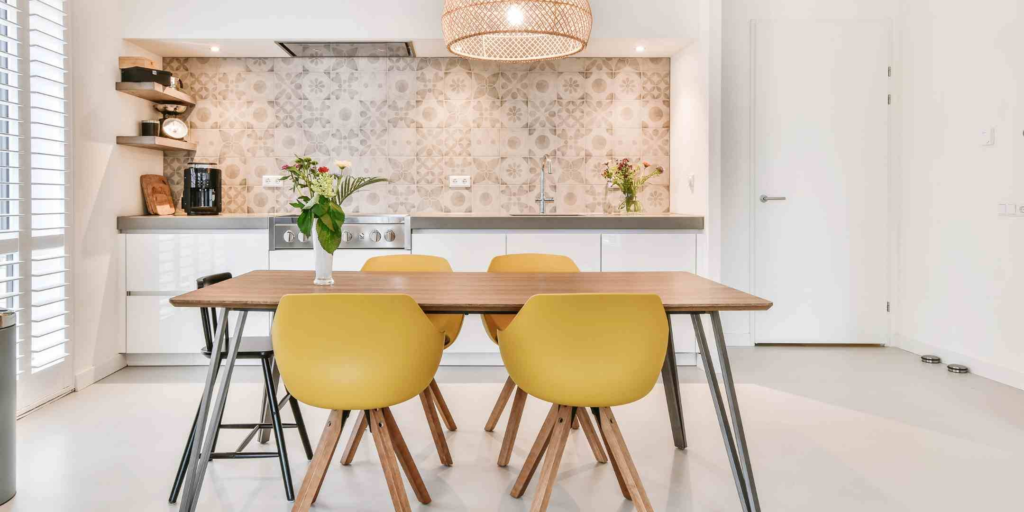
Dining chairs should look good, but comfort matters just as much. After all, a dining area is meant to be used, not simply photographed.
If your existing chairs are structurally fine but look dated, consider updating their appearance with washable cushions or simple seat covers.
When buying new chairs, think about the size of the table and the available space around it. Oversized chairs can make a small dining area feel crowded.
For a coordinated look, the chairs do not always have to be identical. Different chairs can work together when they share a similar color, material, or overall style.
Bring in a Little Greenery in Kitchen & Dining
Plants are an easy way to make kitchen and dining spaces feel fresher.
A small herb plant near a sunny kitchen window can be both attractive and useful. Plants such as mint, basil, or coriander may be convenient choices for people who enjoy using fresh herbs while cooking.
If your kitchen does not receive enough natural light, decorative greenery can still add visual interest.
For dining spaces, a small tabletop plant or vase of flowers can soften the room. Just make sure the arrangement is not so large that people sitting across the table have difficulty seeing each other.
Use Baskets and Containers for Better Organization
Good organization can make a kitchen look stylish without adding decoration.
Baskets are useful for grouping items together, particularly in open shelving or pantry areas. Containers can also help keep ingredients organized and make it easier to see what you have.
Matching containers can create a neat appearance, but you do not have to replace everything at once. Start with the areas that become messy most often.
Labels can be helpful too. They are especially useful when several ingredients look similar or when different family members share the kitchen.
A well-organized kitchen usually feels calmer because there is less searching and rearranging during everyday tasks.
Make Use of Small Kitchen Corners
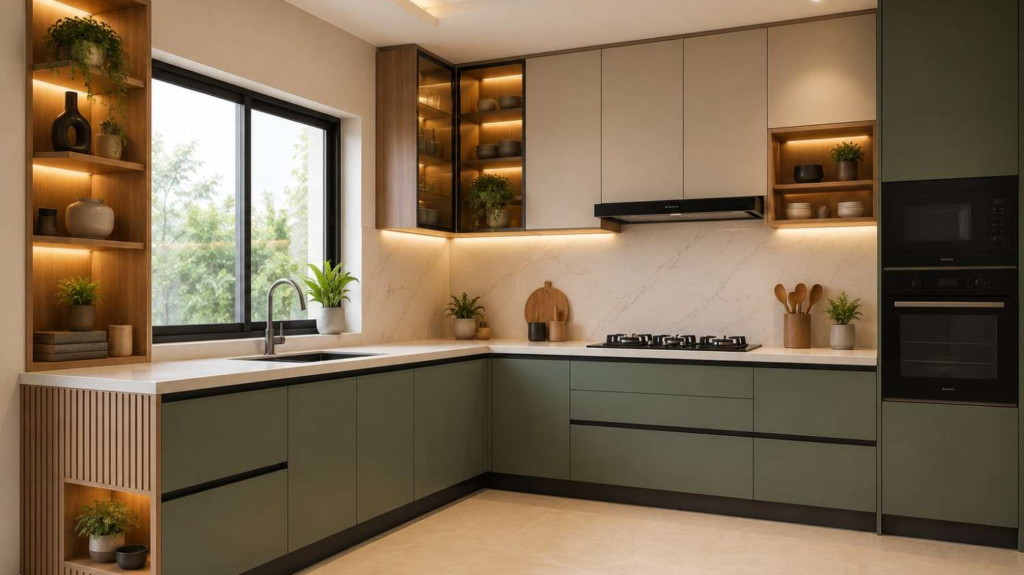
Small corners are often ignored, but they can provide valuable space.
A narrow shelf can hold spices or mugs. A small rolling cart can provide extra storage without taking up much floor space. An empty corner near the dining area might work well for a compact cabinet or plant stand.
The important thing is to avoid filling a corner simply because it is empty. Every addition should have a purpose.
In a smaller kitchen, choosing furniture that provides storage as well as another function can be particularly useful.
Add a Small Breakfast Area
If you have enough space, a small breakfast corner can make mornings more convenient.
A compact table with two chairs may be enough. In very small kitchens, a narrow wall-mounted table or breakfast counter can provide a similar function.
Keep the area simple. A small plant, a wall picture, or a comfortable cushion can make it feel welcoming without taking up too much room.
This kind of setup can also become a useful place for reading, having tea, or doing quick everyday tasks.
Display Your Favorite Kitchen & Dining Items
Not everything needs to be hidden inside cabinets.
If you have attractive ceramic bowls, colorful mugs, wooden cutting boards, or interesting serving dishes, consider displaying a few of them.
A small collection can give the kitchen a personal touch and make it feel less like a showroom.
The trick is to choose a limited number of items. Displaying everything you own can create visual clutter.
Rotate decorative pieces occasionally if you enjoy changing the look of your kitchen throughout the year.
Use Wall Space Creatively
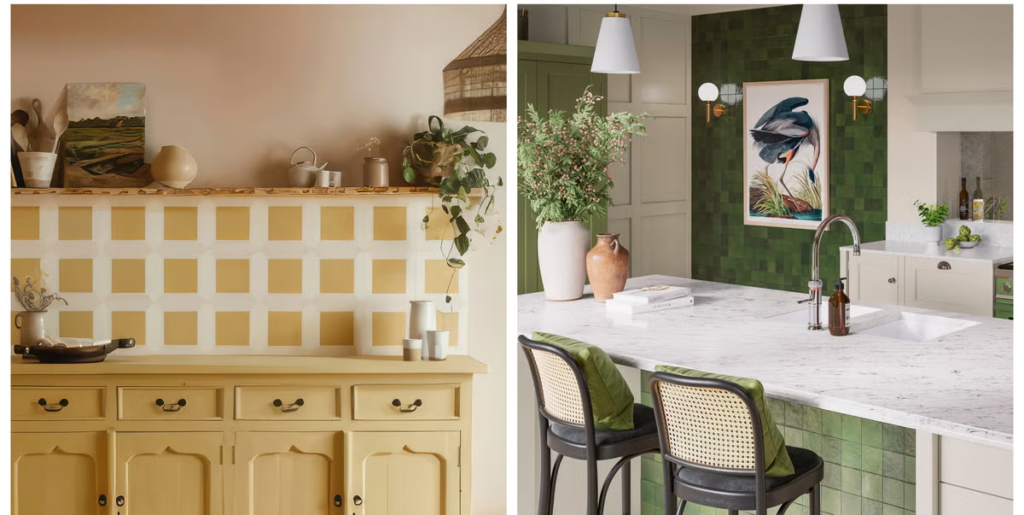
Kitchen walls offer more possibilities than many people realize.
Framed food illustrations, simple artwork, a clock, or a small collection of decorative plates can make an empty wall more interesting.
A wall-mounted rack can also hold frequently used utensils or mugs while keeping them within reach.
If you are decorating a rental home, removable hooks or other temporary solutions can help you personalize the space without making permanent changes.
Create a Comfortable Dining Atmosphere
A stylish dining room is not only about furniture and decoration. The atmosphere matters too.
Keep the table comfortable and the surrounding area easy to move through. Avoid placing unnecessary furniture around the dining table.
Soft lighting, simple decorations, and clean surroundings can make ordinary meals feel more enjoyable.
If your dining area is connected to the living room, try to create some visual connection between the two spaces. Similar colors or materials can help the areas feel like part of the same home.
Add Texture With Fabrics
Fabric is an easy way to add warmth and personality.
Table runners, cloth napkins, chair cushions, curtains, and kitchen towels can introduce different textures without requiring major changes.
You can use natural-looking materials such as cotton or linen for a relaxed appearance, or choose patterns if you want the room to feel more playful.
It is usually easier to create a balanced look when you repeat a few colors rather than using many unrelated patterns.
Keep the Kitchen & Dining Area Easy to Clean
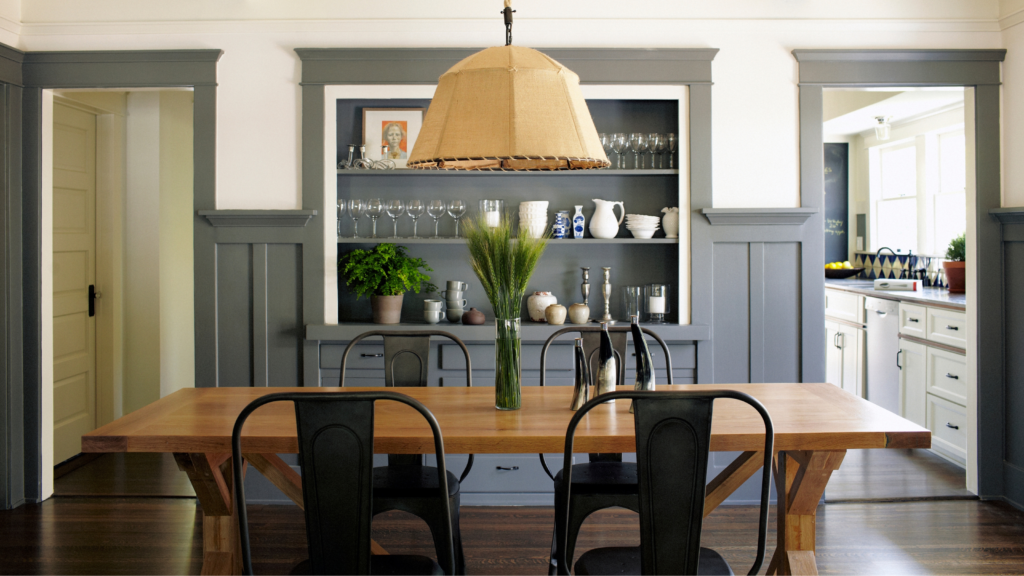
Style should not come at the cost of practicality.
Choose dining accessories that are easy to clean, especially if children or pets regularly use the space. Washable table runners and easily cleaned surfaces can save time.
Try not to place too many small decorative objects around the dining area. They may look attractive at first but can make regular dusting and cleaning more difficult.
A stylish room is much easier to enjoy when maintaining it does not become a daily chore.
Add Personal Details
The most appealing homes usually have something personal about them.
A family photograph, handmade item, travel souvenir, favorite piece of pottery, or artwork can make a kitchen or dining space feel connected to the people who live there.
You do not need to follow a particular interior design trend. Your home should reflect your taste and everyday life.
Even a simple dining table can feel special when it includes objects that have meaning to you.
Try Seasonal Kitchen and Dining Updates
You do not need to completely redecorate your home whenever the season changes.
Small updates can be enough. During warmer months, lighter fabrics and fresh flowers can create an airy feeling. During cooler months, warmer textures, deeper shades, and cozy table accessories can make the dining area feel more comfortable.
Seasonal changes are also a good opportunity to remove items you no longer use and reorganize cabinets.
This keeps the kitchen feeling fresh without unnecessary spending.
Make Storage Part of the Design
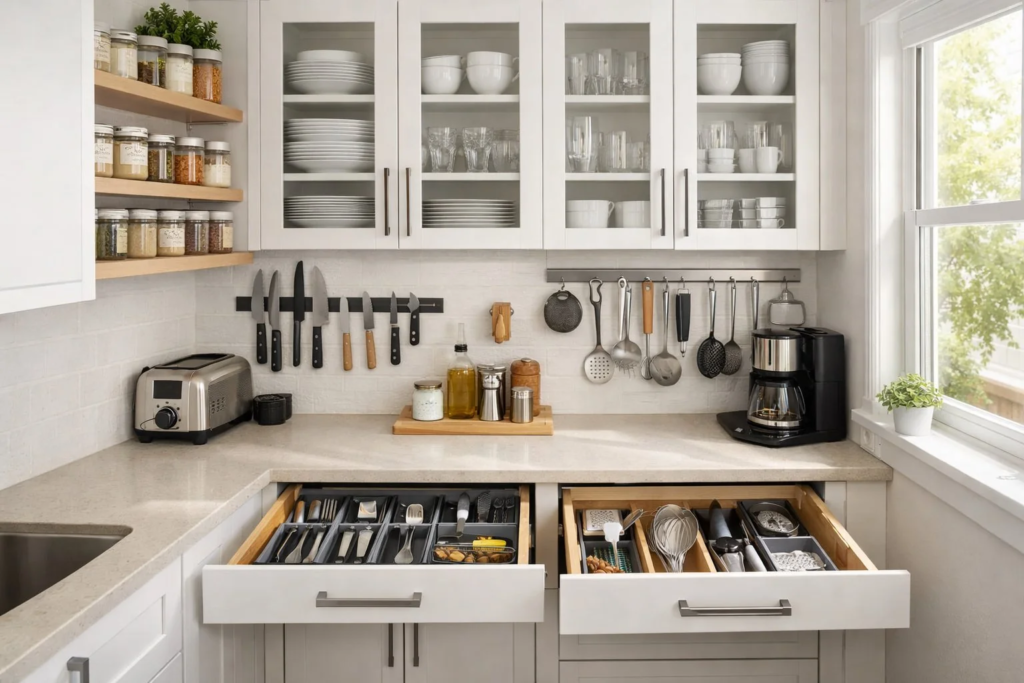
Storage does not have to be boring.
A stylish cabinet, attractive jars, wooden boxes, or woven baskets can serve a practical purpose while contributing to the overall appearance of the room.
When choosing storage, consider what you need to keep inside it before buying anything. This prevents you from collecting containers that do not actually solve your storage problems.
For small kitchens, vertical storage can be particularly useful because it makes better use of wall space.
Do Not Try to Match Everything
A common mistake when decorating a kitchen or dining area is trying to make every item look identical.
A little variety can make a space feel more natural.
Different textures, shapes, and materials can work together as long as there is some connection between them. For example, wooden elements can complement neutral-colored furniture, while metal details can add a modern touch.
Instead of asking whether every item matches perfectly, think about whether the overall room feels balanced.
Easy Kitchen and Dining Ideas on a Budget
You can refresh these spaces without spending a lot of money.
Start by rearranging what you already own. Move decorative items to different shelves, change the dining table arrangement, or reorganize your kitchen counters.
Next, consider small additions such as new kitchen towels, a table runner, storage baskets, a plant, or a simple wall print.
Painting one wall or replacing cabinet handles can also create a noticeable change without the cost of a full kitchen renovation.
Sometimes the biggest improvement comes from removing things rather than buying new ones.
Simple Ideas to Try This Week
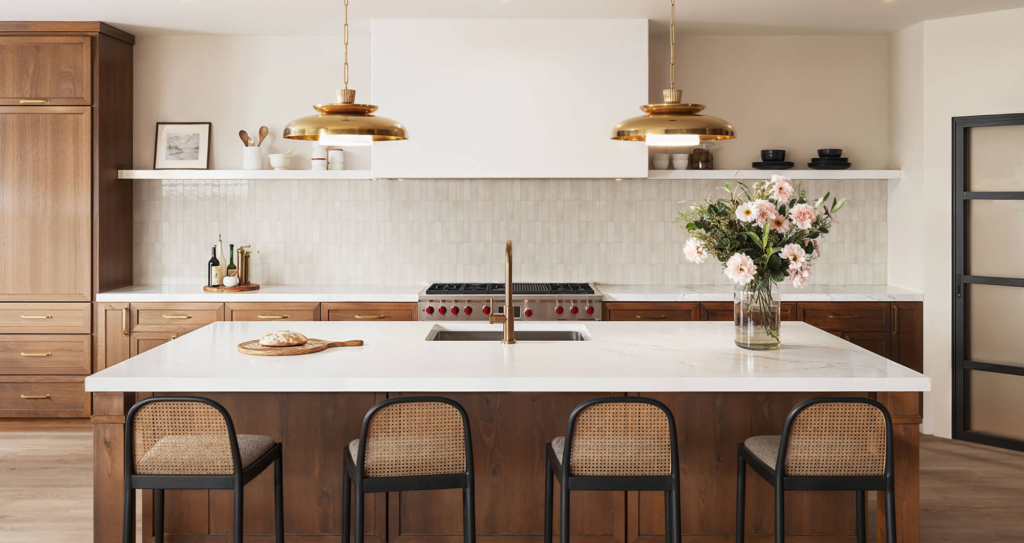
If you want to refresh your kitchen and dining area but do not know where to begin, try a few of these ideas:
- Clear unnecessary items from the kitchen counter.
- Organize one drawer or cabinet.
- Add a small plant or fresh flowers.
- Change the arrangement of your dining table.
- Replace worn kitchen towels.
- Add a simple table runner.
- Display a few favorite mugs or bowls.
- Improve lighting in the dining area.
- Use baskets to group smaller kitchen items.
- Add a personal photo or artwork to an empty wall.
- Rearrange furniture to improve movement around the room.
- Choose one accent color and repeat it in small details.
You do not need to complete all of them. Pick two or three that fit your home and see how the space feels afterward.
Final Thoughts
Upgrading your kitchen and dining space rarely requires maxing out a credit card or tearing down walls. Most of the time, the potential is already sitting right there in front of you—it’s just buried under daily clutter or laid out in a way that doesn’t actually fit your routine.
Start by addressing whatever drives you nuts on a Tuesday morning. If you’re constantly shoving mail out of the way to chop an onion, clear those counters first. If the dining table feels cold and uninviting, ditch the stiff, picture-perfect decor. Throw down a simple runner, bring in a low-maintenance houseplant, or hang a piece of art that makes you smile.
Above all, prioritize function over aesthetics. A pristine, magazine-ready kitchen is useless if you don’t have room to actually cook a meal, and nobody wants to linger in a dining room with rock-hard seating. Don’t worry about mimicking design trends you see online. Focus on creating a practical, warm space where your family can cook, share meals, and hang out without feeling cramped.
Frequently Asked Questions.
1. How can I make my kitchen look more stylish?
Use simple decor, keep countertops organized, add suitable lighting, and choose colors and accessories that complement the kitchen.
2. How can I keep my kitchen organized?
Use storage containers, drawer organizers, shelves, and labeled jars to keep frequently used items easy to find.
3. What are some simple dining area ideas?
A clean dining table, comfortable seating, attractive tableware, soft lighting, and a small centerpiece can make the dining area feel more inviting.
4. How can I decorate a dining table without making it look crowded?
Choose one simple centerpiece, such as flowers, a small plant, or a decorative bowl, and leave enough space for everyday use.
5. How can I create a stylish kitchen and dining space on a budget?
Focus on small changes such as new organizers, table linens, lighting, plants, or decorative accessories instead of replacing major furniture or appliances.
- Start With a Simple Kitchen & Dining Layout
- Keep the Kitchen Counter Clutter-Free
- Use Open Shelves for Both Style and Storage
- Choose Kitchen & Dining Colors Carefully
- Add Warm Lighting in Kitchen & Dining
- Make Your Kitchen & Dining Table the Center of Attention
- Choose Comfortable Dining Chairs
- Bring in a Little Greenery in Kitchen & Dining
- Use Baskets and Containers for Better Organization
- Make Use of Small Kitchen Corners
- Add a Small Breakfast Area
- Display Your Favorite Kitchen & Dining Items
- Use Wall Space Creatively
- Create a Comfortable Dining Atmosphere
- Add Texture With Fabrics
- Keep the Kitchen & Dining Area Easy to Clean
- Add Personal Details
- Try Seasonal Kitchen and Dining Updates
- Make Storage Part of the Design
- Do Not Try to Match Everything
- Easy Kitchen and Dining Ideas on a Budget
- Simple Ideas to Try This Week
- Final Thoughts
- Frequently Asked Questions.